



Contact Us Today!

Root Canal vs Cavity Filling: Which Treatment Does Your Tooth Need?
Posted on May 19th, 2023
Hearing that you need dental treatment can be stressful, especially if you’re unsure what the procedure involves. Many patients ask about the difference between a root canal and cavity filling, and whether one treatment is more serious than the other.
While both procedures are used to treat damaged teeth, they address very different levels of decay and infection. A filling treats minor decay, while a root canal treats more advanced decay that has reached the inner part of the tooth.
Understanding the difference between a root canal and cavity treatment can help you feel more confident about your dental care.
In this guide, we will explain how fillings and root canals work, when each is necessary, and what signs may indicate more advanced treatment. Afterward, schedule your appointment with the compassionate team at Windy City Family Dental—emergency dental treatment is available!
What Is a Dental Filling?
A dental filling is one of the most common restorative dental treatments. Fillings are used to repair teeth affected by small to moderate cavities, minor fractures, or worn enamel.
During treatment, the dentist removes the decayed portion of the tooth and fills the area with a durable material such as composite resin. This restores the tooth’s shape, strength, and function while preventing the cavity from spreading.
Most fillings are completed in a single appointment and involve minimal recovery time.
Fillings are generally recommended when decay is limited to the outer layers of the tooth, known as the enamel and dentin.
What Is a Root Canal?
A root canal is a more advanced procedure used when decay or infection reaches the inner portion of the tooth called the pulp. The pulp contains nerves, blood vessels, and connective tissue.
When bacteria reach the pulp, it can cause severe pain, inflammation, or infection. A root canal removes the infected tissue inside the tooth, disinfects the root canals, and seals the space to prevent future infection.
In many cases, a dental crown is placed afterward to strengthen and protect the tooth.
Although root canals have a reputation for being painful, modern techniques and anesthesia make the procedure much more comfortable than many people expect.
Root Canal vs Cavity: What is the Main Difference?
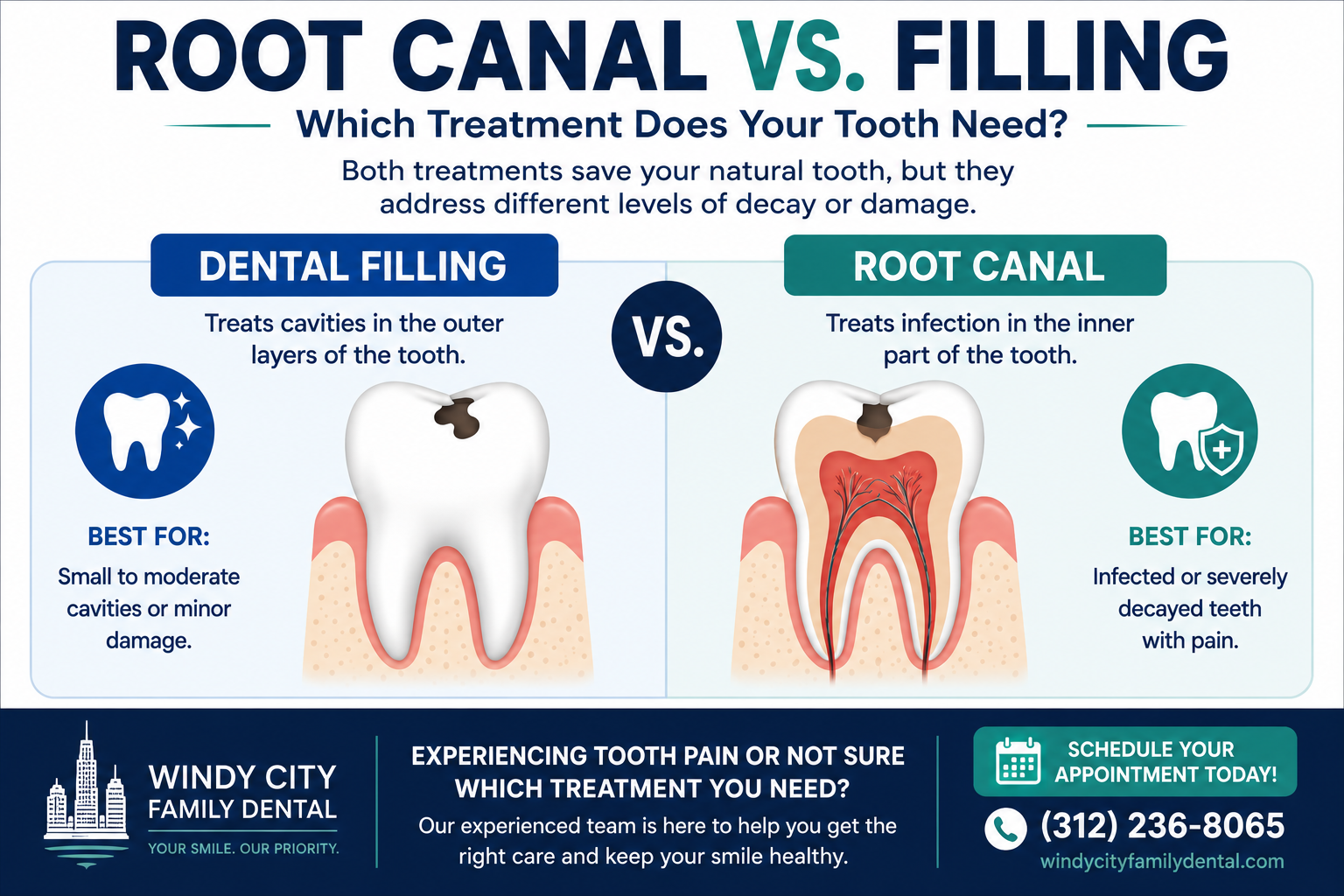
The biggest difference between a filling and a root canal is how deeply the tooth is damaged.
A filling treats decay before it reaches the nerve of the tooth. A root canal becomes necessary once the infection or damage affects the pulp inside the tooth.
Think of it this way:
- A filling repairs a cavity in the outer part of the tooth
- A root canal treats infection inside the tooth itself
Both procedures aim to save the natural tooth whenever possible.
Signs You May Need a Filling
Cavities do not always cause symptoms in the beginning, which is why regular dental exams are important. However, there are some warning signs that may indicate you need a filling.
You may need a filling if you experience:
- Mild tooth sensitivity to sweets or cold foods
- Small visible holes or dark spots on teeth
- Minor discomfort when chewing
- Food getting stuck in certain areas of the mouth
In many cases, fillings can stop the cavity before it becomes larger and more painful.
Signs You May Need a Root Canal
If tooth decay continues untreated, bacteria can eventually reach the pulp. At this stage, symptoms are often more severe.
Common signs that may indicate the need for a root canal include:
- Persistent or throbbing tooth pain
- Sensitivity to hot or cold that lingers
- Swelling around the gums
- Pain when biting or chewing
- Darkening or discoloration of the tooth
- A pimple-like bump on the gums
Not every infected tooth causes obvious pain, which is why dental X rays and exams are important for diagnosis.
Teeth Filling vs Root Canal: Which Is Better?
Patients often ask whether a filling or a root canal is the “better” treatment. The truth is that neither procedure is better or worse on its own. The correct treatment depends entirely on the condition of the tooth.
A filling is usually preferred when decay is caught early because it is simpler and less invasive. However, once infection reaches the pulp, a filling alone will not solve the problem.
In those cases, a root canal is necessary to remove the infection and save the tooth from extraction.
The best treatment is always the one that addresses the full extent of the damage while preserving as much natural tooth structure as possible.
Can a Filling Turn Into a Root Canal Later?
Yes, this can happen if decay progresses beneath or around an existing filling. Over time, bacteria can enter the tooth through cracks, worn fillings, or untreated cavities.
This is one reason routine dental checkups are so important. Dentists can monitor existing fillings and detect problems before they become severe.
Treating cavities early significantly reduces the likelihood of needing a root canal later.
How Dentists Decide Between a Filling and a Root Canal
Dentists use several factors to determine which treatment is appropriate. These may include:
- The size and depth of the cavity
- X-ray findings
- Symptoms such as pain or swelling
- Whether the pulp is infected or inflamed
- The structural condition of the tooth
Sometimes a tooth that appears to need only a filling may actually require root canal treatment once the decay is fully evaluated.
A thorough exam allows dentists to recommend the most effective and conservative treatment possible.
Preventing Cavities and Root Canals
The best way to avoid both fillings and root canals is through preventive dental care. Brushing twice daily, flossing, limiting sugary foods, and attending regular dental cleanings all help reduce the risk of decay.
Early treatment is also important. Small cavities are much easier and less invasive to treat than deep infections. Routine exams allow dentists to identify issues before they become painful or expensive to repair.
Schedule Your Dental Exam in Chicago
If you are trying to understand the difference between a root canal and cavity filling or are experiencing tooth pain, our Chicago emergency dentists at Windy City Family Dental are here to help.
Located in the heart of the Chicago Loop on Michigan Avenue, our office provides compassionate, patient-focused dental care using modern technology and personalized treatment plans.
Whether you need a simple filling or more advanced restorative treatment, our experienced team will guide you through every step of the process comfortably and honestly.


